
Client Engagement Strategies: Building Strong Connections
Updated: Sep 10
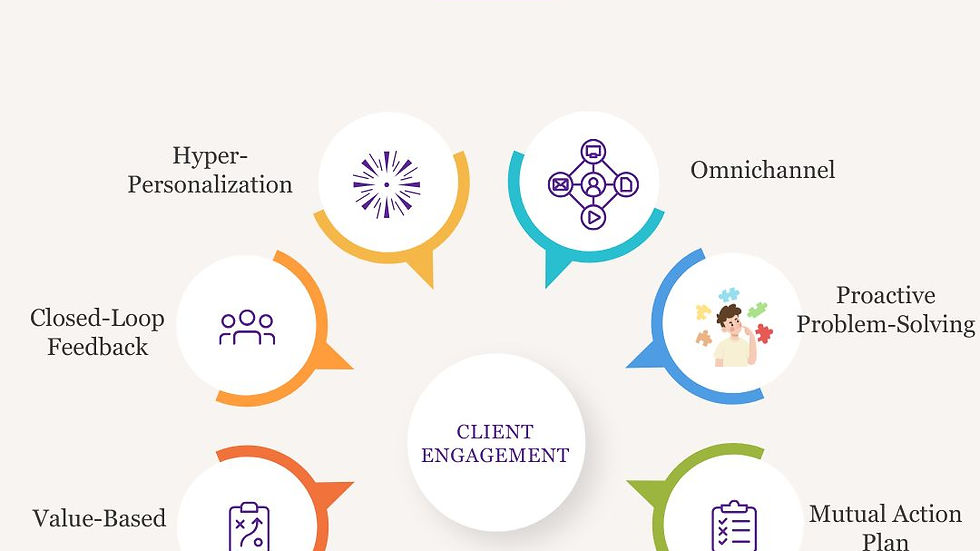
Understanding Client Engagement
Let's consider a scenario where you are a customer looking to buy a car. Take a moment to think about who you would want to discuss your car purchase with.
You would likely prefer to talk to someone who:
Has extensive knowledge about cars.
Presents themselves well.
Supports every commitment with facts.
Connects with you, treating you as the most important person.
Proactively addresses all your questions.
In essence, you want a salesperson who treats the discussion as if it’s not just your car, but their car too. The focus should be on mutual benefit and your needs.
Now, imagine a different situation. You are not in the market for a car, but a salesperson with all these qualities calls you. Would you respond the same way? Probably not. Why? Because you are not a potential buyer at that moment.
The Importance of Engagement
So, how do we effectively engage with clients? What approach should we take? Will this help with conversions? How does it build the sales pipeline?
Engagement begins with the first contact, whether it’s a cold call, cold email, or any other form of outreach. From that initial interaction, treat your prospect with the utmost priority. This is what you would expect as a buyer, and it aligns with the buyer's mentality.
You might wonder, what if my prospective client isn’t qualified? Why should I treat them with respect? The answer is simple: it’s about building your pipeline. Every interaction contributes to your ongoing sales pipeline. A customer may not be an immediate sale, but they could become one if treated with care and passion.
Nurturing Warm Leads
Let’s explore a scenario where a prospect has a requirement but takes a long time to respond. In sales, we refer to this as a warm lead. If you push this lead too hard towards closing, you risk losing the opportunity. Instead, focus on converting this warm lead into a hot lead.
To do this, educate your lead with comprehensive product knowledge. Engage in passive penetration of your product. Share valuable information through WhatsApp messages, even if the client isn’t responding. Provide insights about the business segment. Share articles that spark interest in your product.
Once your client is educated, they will remember you as their teacher (unless you’re not a good one). This can lead to sales and referrals. Satisfied clients often refer multiple new clients, creating an organic referral cycle that enriches your sales pipeline over time.
To ensure your client remembers you, consider sending a birthday card or a simple message. After every referral sale, make a thank-you call or send a small gift. Little gestures can make a big impact.
Educate and Engage
When you reach out to a warm client, remember to focus on education. This builds trust and rapport, making it easier for them to consider your offerings.
Conclusion
In conclusion, effective client engagement is about building relationships. It’s about treating every prospect with respect and care, regardless of their immediate potential. By nurturing leads and providing valuable information, you can create a strong sales pipeline that benefits everyone involved.
To train your team, feel free to connect with us.


